About the Project
BaroCool - RE-free magnetoelastic materials for efficient and environmentally friendly cooling
It is difficult to imagine today's society without fridge or other cooling devices. The refrigerator is found in practically every house and is the most popular household appliance. In Poland alone, about 3 million of them are sold annually. Thus, refrigeration equipment is responsible for a large part of electrical energy consumption. Therefore, by using them, we contribute to the increase of the climate change, environmental pollution and the reduction of fossil fuel stocks.
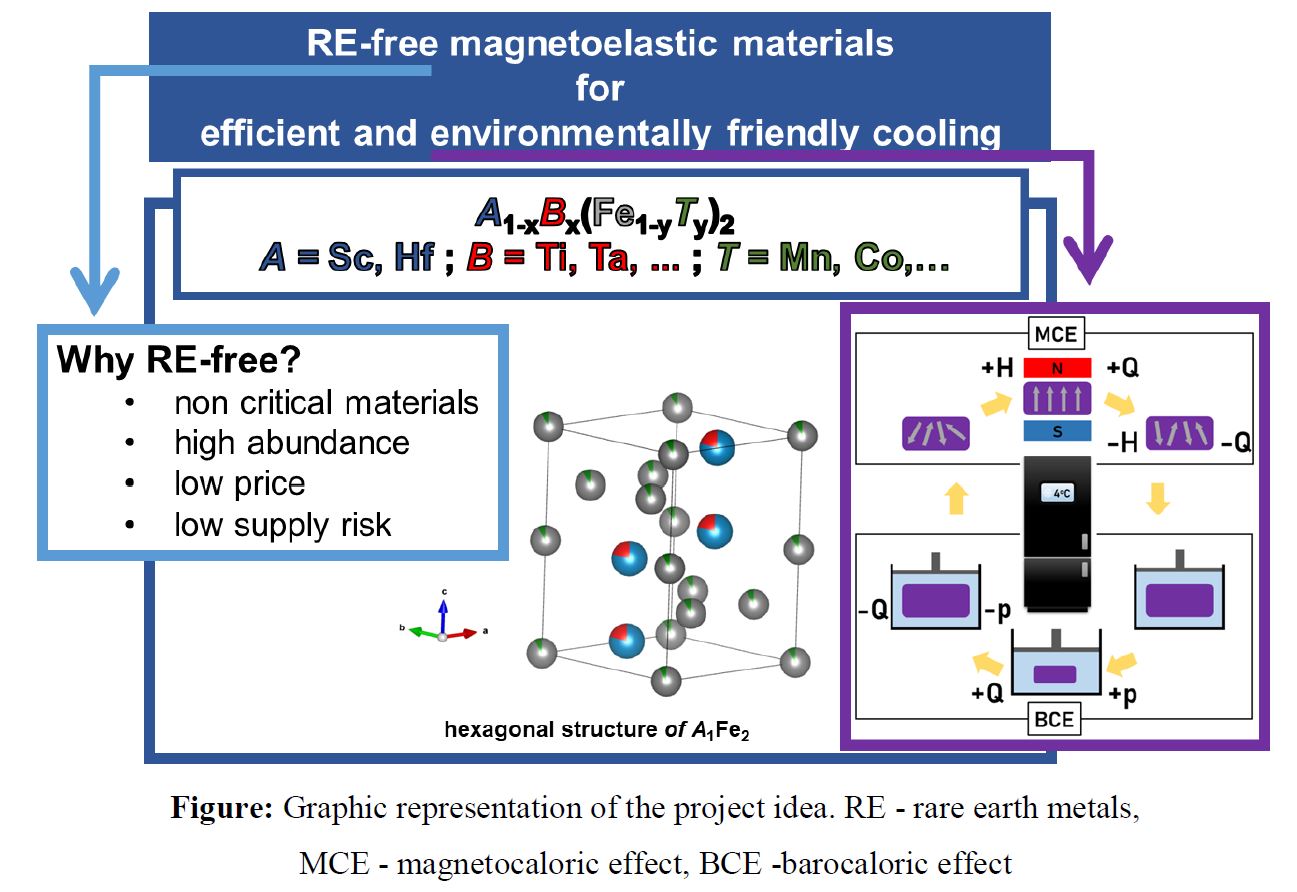
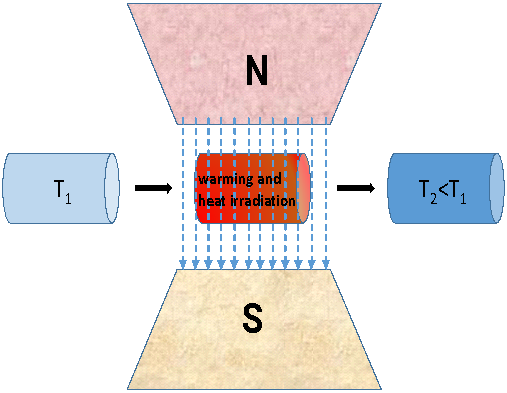
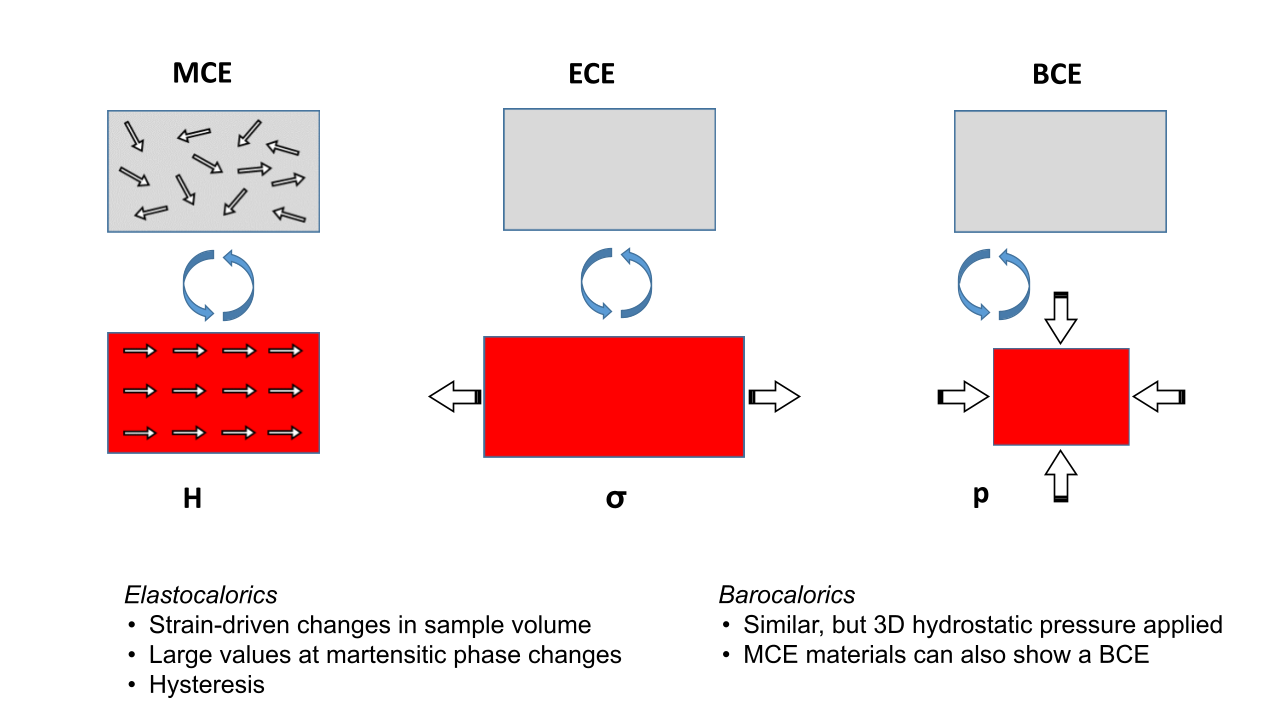
The solution to this problem may be solid-state refrigeration technology. If a material in the form of a solid state is exposed to external agent (e.g. magnetic field, pressure) under appropriate conditions, the temperature of the material will change. Thus, by properly manipulating the external agent, we can build a heat engine that will cool or heat. Depending on the external agent, the effect of a temperature change is called the magnetocaloric effect (MCE) when we change the magnetic field, or the barocaloric effect (BCE) when we change the pressure. The material in which the given effect occurs is called magnetocaloric or barocaloric and its physical properties determine how large temperature change we observe. Interestingly, both effects can occur in the same material at the same time leading to an increase in cooling capacity. Currently, much attention has been paid to the magnetocaloric effect. Many different magnetocaloric materials have been tested and dozens of prototypes of magnetic refrigerators have been built, which are still too inefficient to go into mass production. The barocaloric effect is less common, but in barocaloric materials much larger temperature changes are observed with a relatively small change in pressure.
The aim of the project will be to search for new materials with a large magneto- and barocaloric effect. The research will be conducted using experimental and theoretical methods in a large international team of scientists. It is expected that materials with very interesting properties will be obtained, which can be used to build environmentally friendly refrigeration systems. Importantly, we want to study how magnetoelastic effects affect the value of MCE and BCE in a selected group of materials.
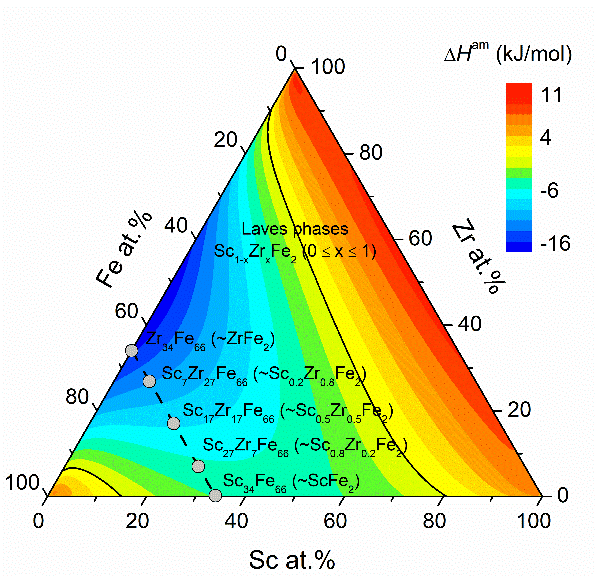
Compounds containing iron (Fe) were selected for the study, which is a very common element in the earth's crust, which makes it easily available and relatively cheap. Iron forms many interesting chemical compounds that are characterized by interesting physical properties and show both magneto- and barocaloric effects. Our interest concentrate on the so-called Laves phases of the general composition A1-xBx(Fe1-yTy)2, where A, B = Sc, Ti, Hf, Nb, Ta,… and T = Mn, Co,… .
As part of the project, we will carry out theoretical calculations that will indicate which compounds are worth producing and then experimentally tested. The produced material samples will be thoroughly tested for physical properties (structural, magnetic, elastic). Then, based on the results of experimental measurements, the values of the parameters characterizing MCE and BCE effects will be determined. The value of these parameters will determine whether a given material is suitable for construction of energy-saving solid-state refrigerators.